https://malmic.ca/wp-content/uploads/2025/11/new-ai-dataset-aims-to-revolutionise-computer-assisted-surgery.x8cadc9af.png780440MaLMIC - Machine Learning in Medical Imaging ConsortiumMaLMIC - Machine Learning in Medical Imaging Consortiumhttps://malmic.ca/wp-content/uploads/2025/11/new-ai-dataset-aims-to-revolutionise-computer-assisted-surgery.x8cadc9af.png
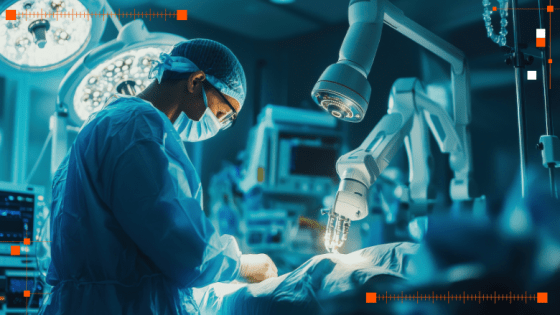
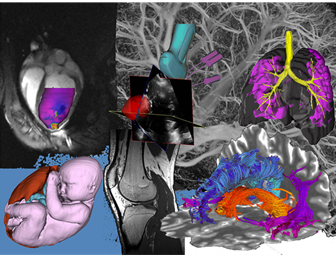
Join us for our upcoming forum featuring two exciting talks exploring Machine Learning to Improve Surgical Outcomes.
https://malmic.ca/wp-content/uploads/2025/11/Joey-Remote-Healthcare-copy.jpg1000630MaLMIC - Machine Learning in Medical Imaging ConsortiumMaLMIC - Machine Learning in Medical Imaging Consortiumhttps://malmic.ca/wp-content/uploads/2025/11/Joey-Remote-Healthcare-copy.jpg
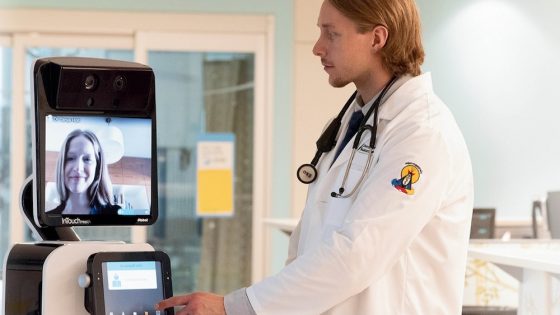
Listen in to two exciting talks from the Virtual Health Hub, which explored how artificial intelligence and virtual care are transforming access to healthcare.
Dr. Scott Adams examined how AI-assisted imaging is redefining medical imaging and expanding access to advanced diagnostics in underserved communities. He also showcased current projects demonstrating how AI can support a more connected, equitable, and sustainable health system.
Dr. Ivar Mendez focused on how virtual care, when grounded in local partnerships and cultural safety, can improve health outcomes in rural, remote, and Indigenous communities. He highlighted the AI tools developed to enable scalable virtual care solutions across Canada and beyond.
https://malmic.ca/wp-content/uploads/2025/10/MRI-for-Brain-Tumor-Detection-scaled-1-1024x485.jpg1024485MaLMIC - Machine Learning in Medical Imaging ConsortiumMaLMIC - Machine Learning in Medical Imaging Consortiumhttps://malmic.ca/wp-content/uploads/2025/10/MRI-for-Brain-Tumor-Detection-scaled-1-1024x485.jpg
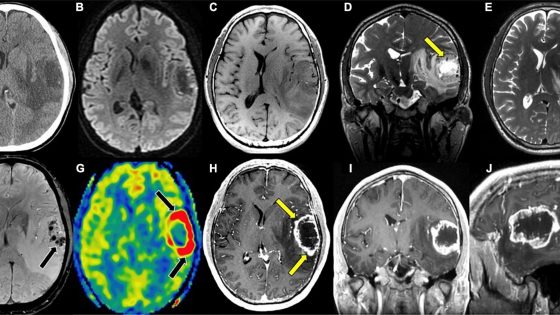
Listen to this high-impact session on AI for brain imaging that bridged cellular detail and clinical translation. Ahmadreza Attarpour’s talk showcased ACE (Artificial intelligence-based Cartography of Ensembles) and MAPL3 (Mapping Axonal Projections in Light-sheet fluorescence microscopy in 3D): end-to-end deep-learning pipelines that turn teravoxel, cellular-resolution light-sheet datasets from cleared rodent brains into unbiased, brain-wide maps of local neuronal activity and connectivity—at both cellular and laminar scales. The second talk by Mahmoud Salman shifted to the neonatal clinic, introducing a robust deep-learning framework that overcomes poor contrast, motion artifacts, and tiny target structures to precisely segment hippocampal subfields and amygdala sub-nuclei from routine MRI. Together, these talks demonstrated how scalable, generalizable methods are pushing neuroscience forward—from whole-brain mapping at unprecedented scale to reliable quantitative biomarkers of early brain maturation.
https://malmic.ca/wp-content/uploads/2025/08/1e37586c-521a-23c5-009b-5e5bf239046e-1024x682.jpg1024682MaLMIC - Machine Learning in Medical Imaging ConsortiumMaLMIC - Machine Learning in Medical Imaging Consortiumhttps://malmic.ca/wp-content/uploads/2025/08/1e37586c-521a-23c5-009b-5e5bf239046e-1024x682.jpg
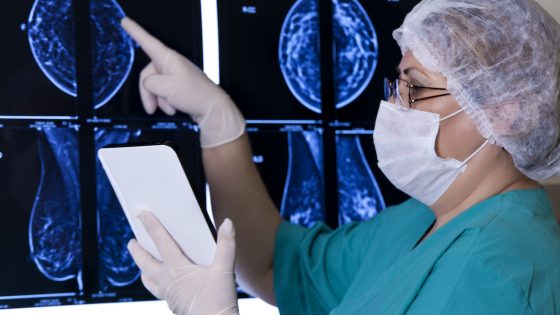
Drs. Amoon Jamzad and Laura Connolly shared two cutting-edge perspectives on advancing cancer surgery through robotics and intelligent tools. Laura spoke about her work on integrating AI-enabled robotics and haptic feedback into breast-conserving surgery to improve tumor removal in highly mobile, deformable tissue. She also shared how robotics combined with photoacoustic imaging can inspect resection cavities post-surgery, aiming for a future where no cancer is left behind. Amoon presented his research on applying deep learning to mass spectrometry data—capturing molecular tissue signatures in real time—to help surgeons accurately distinguish healthy from cancerous tissue. Amoon highlighted strategies for making these models trustworthy, explainable, and generalizable, and for translating mass spectrometry into intraoperative and post-resection workflows. Together, these innovations promise to enhance surgical precision, reduce positive margins, and improve patient outcomes.
https://malmic.ca/wp-content/uploads/2025/03/shutterstock_476546674-1024x683.jpg1024683MaLMIC - Machine Learning in Medical Imaging ConsortiumMaLMIC - Machine Learning in Medical Imaging Consortiumhttps://malmic.ca/wp-content/uploads/2025/03/shutterstock_476546674-1024x683.jpg
Glenn Bauman and Katherine Zukotynski spoke at the April MaLMIC forum about FULCRUM, a clinical imaging database they created. It is a database of PSMA PET/CT scans acquired as part of a province-wide prospective study. It is composed of approximately 1000 men with recurrent prostate cancer imaged with 18F-DCFPyL or 18F-PSMA 1007 with centralized expert review, annotation and segmentation of PET-detected recurrent prostate cancer foci. The database is being used to design educational tools and enable machine learning/deep learning tools for automated lesion detection.
https://malmic.ca/wp-content/uploads/2024/11/Screenshot-2024-11-18-at-12.24.13 PM-1024x480.png1024480MaLMIC - Machine Learning in Medical Imaging ConsortiumMaLMIC - Machine Learning in Medical Imaging Consortiumhttps://malmic.ca/wp-content/uploads/2024/11/Screenshot-2024-11-18-at-12.24.13 PM-1024x480.png
MaLMIC is pleased to support the 2025 IGT x ImNO Joint Symposium in Toronto ON on March 5 and 6, 2025. Throughout the symposium, there will be talks, pitches and posters on AI, deep learning and machine learning.
https://malmic.ca/wp-content/uploads/2025/01/The-Open-Health-Imaging-Foundation-1024x604.png1024604MaLMIC - Machine Learning in Medical Imaging ConsortiumMaLMIC - Machine Learning in Medical Imaging Consortiumhttps://malmic.ca/wp-content/uploads/2025/01/The-Open-Health-Imaging-Foundation-1024x604.png
January 31, 2025
3:00 to 4:30 p.m. Eastern
Gordon Harris and Alireza Sedghi presented information about the Open Health Imaging Foundation (https://ohif.org/), an open source web based medical imaging framework, at the January forum. The presentations were followed by questions and answers about the talks, and discussions focused on lessons learned, opportunities to collaborate, and sharing of data.
https://malmic.ca/wp-content/uploads/2024/09/shutterstock_2033472077-1024x683.jpg1024683MaLMIC - Machine Learning in Medical Imaging ConsortiumMaLMIC - Machine Learning in Medical Imaging Consortiumhttps://malmic.ca/wp-content/uploads/2024/09/shutterstock_2033472077-1024x683.jpg
October 25, 2024
3:00 to 4:30 p.m. Eastern
Aly Khalifa and Sanwook Kim presented at the MaLMIC fall forum, hosted by Julia Publicover. The presentations were followed by questions and answers about the talks, and discussion focused on lessons learned, opportunities to collaborate, and sharing of data.
https://malmic.ca/wp-content/uploads/2024/09/shutterstock_1089540233-1024x597.jpg1024597MaLMIC - Machine Learning in Medical Imaging ConsortiumMaLMIC - Machine Learning in Medical Imaging Consortiumhttps://malmic.ca/wp-content/uploads/2024/09/shutterstock_1089540233-1024x597.jpg
September 20, 2024
3:00 to 4:30 p.m. Eastern
Elham Dolatabadi and Catherine Stinson presented at the MaLMIC fall forum, hosted by Amber Simpson. The presentations were followed by questions and answers about the talks, and discussion focused on lessons learned, opportunities to collaborate, and sharing of data.
https://malmic.ca/wp-content/uploads/2024/06/Screenshot-2024-06-17-at-3.00.07 PM-1024x467.png1024467MaLMIC - Machine Learning in Medical Imaging ConsortiumMaLMIC - Machine Learning in Medical Imaging Consortiumhttps://malmic.ca/wp-content/uploads/2024/06/Screenshot-2024-06-17-at-3.00.07 PM-1024x467.png
Join us for an engaging webinar on June 27th at 11:30am that showcases the Quantitative Imaging for Personalized Cancer Medicine (QIPCM) program which provides end-to-end testing and analysis support for clinical trials to improve consistency and reliability in clinical trial imaging data.
https://malmic.ca/wp-content/uploads/2022/01/ImNO.png336255MaLMIC - Machine Learning in Medical Imaging ConsortiumMaLMIC - Machine Learning in Medical Imaging Consortiumhttps://malmic.ca/wp-content/uploads/2022/01/ImNO.png
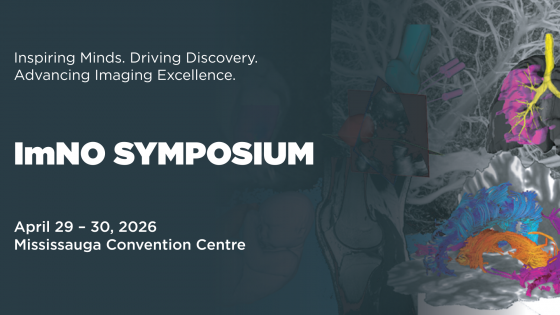
MaLMIC is pleased to support the ImNO 2024 symposium in Mississauga ON on March 19 and 20, 2024. Here are some of the sessions featuring AI and machine learning:
– Keynote: Anne Martel will talk about AI for medical image analysis: Living with limited data
– Debate: The role of AI in medicine
– Panel: Commercialization of AI-enabled medical imaging technology
Throughout the symposium, there will also be talks, pitches and posters on AI, deep learning and machine learning.
We hope you can join us at ImNO 2024!
https://malmic.ca/wp-content/uploads/2023/10/shutterstock_1656143677-1024x681.jpg1024681MaLMIC - Machine Learning in Medical Imaging ConsortiumMaLMIC - Machine Learning in Medical Imaging Consortiumhttps://malmic.ca/wp-content/uploads/2023/10/shutterstock_1656143677-1024x681.jpg
This forum focused on computational pathology for outcome prediction in cancer. Mattias Rantalainen was the first speaker talking about his research program and the work of Stratipath predictive models that are being translated into the clinic. Faisal Mahmood, the second speaker, spoke about the work in his lab that uses machine learning, data fusion and medical image analysis to develop streamlined workflows for objective diagnosis, prognosis, and biomarker discovery. The presentations were followed by questions and answers about the talks, and discussion focused on lessons learned, opportunities to collaborate, and sharing of data.
https://malmic.ca/wp-content/uploads/2023/10/shutterstock_326305964-1024x683.jpg1024683MaLMIC - Machine Learning in Medical Imaging ConsortiumMaLMIC - Machine Learning in Medical Imaging Consortiumhttps://malmic.ca/wp-content/uploads/2023/10/shutterstock_326305964-1024x683.jpg
This forum focused on translating AI-based innovations in medicine into the commercial world and the clinic. The first speaker, Qian Cao, spoke about developing AI-enabled software as a medical device and the FDA Centre for Devices and Radiological Health’s perspective on AI/ML devices. Our second speaker, Eli Gibson, spoke about the complexities of translating AI/ML ideas from a manufacturer’s perspective and showcase examples. The presentations were followed by questions and answers about the talks, and discussion focused on lessons learned, opportunities to collaborate, and sharing of data.
https://malmic.ca/wp-content/uploads/2023/09/shutterstock_1722890056-1024x575.jpg1024575MaLMIC - Machine Learning in Medical Imaging ConsortiumMaLMIC - Machine Learning in Medical Imaging Consortiumhttps://malmic.ca/wp-content/uploads/2023/09/shutterstock_1722890056-1024x575.jpg
The October forum focused on using machine learning to predict disease progression. Su-In Lee, described the use of text and phenotypic data in medical records for predicting patients’ clinical course, and potential uses for medical management. The presentation was followed by questions and answers about the talk, and discussion focused on lessons learned, opportunities to collaborate, and sharing of data.
https://malmic.ca/wp-content/uploads/2023/07/shutterstock_1654598794-1024x683.jpg1024683MaLMIC - Machine Learning in Medical Imaging ConsortiumMaLMIC - Machine Learning in Medical Imaging Consortiumhttps://malmic.ca/wp-content/uploads/2023/07/shutterstock_1654598794-1024x683.jpg
The MaLMIC fall forum, hosted by Dr. Lincoln Stein, focused on human sample and data resources for machine learning research. Dr. Dianne Chadwick described the Ontario Tumour Bank (OTB)’s repository of human cancer biospecimens and de-identified clinical data. Following this, Dr. Philip Awadalla provided an overview of the Ontario Health Study (OHS) and described research from his lab using simulation-based and machine learning tools to analyze evolution in non-recombining systems and the use of liquid biopsies to identify genetic and epigenetic markers indicative of cancer development. The presentations were followed by questions and answers about the talks, and discussion focused on lessons learned, opportunities to collaborate, and the availability of data and biosamples from OTB and the OHS.
https://malmic.ca/wp-content/uploads/2023/06/shutterstock_1741769819-1024x631.jpg1024631MaLMIC - Machine Learning in Medical Imaging ConsortiumMaLMIC - Machine Learning in Medical Imaging Consortiumhttps://malmic.ca/wp-content/uploads/2023/06/shutterstock_1741769819-1024x631.jpg
Artificial Intelligence (AI) applied to medical images has the potential to transform patient care, especially in radiation oncology where radiological imaging is ubiquitous and treatment planning is time consuming.
AI models are data hungry but medical data are often insufficient for many applications. Building foundational models and fine-tuning them for specific medical tasks with only a few data points represents a new avenue of research with high translational potential. However, there is a lack of large compendia of radiological data that are sufficiently curated for building these foundational models.
In this session, the presenters described current work on implementing Med-ImageNet, a compendium of radiological images that have been standardised to develop deep learning models, such radiomics predictors or the foundational MedSAM model.
https://malmic.ca/wp-content/uploads/2023/05/shutterstock_2284573367-1024x597.jpg1024597MaLMIC - Machine Learning in Medical Imaging ConsortiumMaLMIC - Machine Learning in Medical Imaging Consortiumhttps://malmic.ca/wp-content/uploads/2023/05/shutterstock_2284573367-1024x597.jpg
Enforcing geometry in machine learning for computational neuroimagingThe June forum centered on the vital role of geometric principles in machine learning applications for medical imaging. The first presentation by Ali Khan addressed machine learning applications in computational neuroimaging, exploring how geometry can inform the representation of neuroanatomy. The second presentation by Uzair Hussain explored geometric machine learning in computational diffusion MRI, describing a novel approach for performing machine learning on data modelled as a sphere. The talks were followed by discussion focused on lessons learned, opportunities to collaborate, and sharing of resources.
https://malmic.ca/wp-content/uploads/2023/03/Screenshot-2023-04-20-at-11.43.50-AM-1024x552.png1024552MaLMIC - Machine Learning in Medical Imaging ConsortiumMaLMIC - Machine Learning in Medical Imaging Consortiumhttps://malmic.ca/wp-content/uploads/2023/03/Screenshot-2023-04-20-at-11.43.50-AM-1024x552.png
For the May forum on machine learning in computational pathology, the first presentation by April Khademi, a researcher, was about the past, present and future of digital pathology and AI. The second presentation by Phedias Diamandis, a pathologist, was about approaches to solve implementation challenges of AI in the real world. The talks were followed by discussion focused on lessons learned, opportunities to collaborate, and sharing of resources.
https://malmic.ca/wp-content/uploads/2023/03/shutterstock_2182220847-scaled-e1679581793601-1024x689.jpg1024689MaLMIC - Machine Learning in Medical Imaging ConsortiumMaLMIC - Machine Learning in Medical Imaging Consortiumhttps://malmic.ca/wp-content/uploads/2023/03/shutterstock_2182220847-scaled-e1679581793601-1024x689.jpg
For the April forum on machine learning in precision health, the first presentation by Ross Mitchell, a Professor of Medicine and AI scientist at the University of Alberta, was about AI and Precision Health. The second presentation by Jacob Jaremko a radiologist, entrepreneur and AI scientist, was about AI augmented ultrasound imaging. The talks were followed by discussion focused on lessons learned, opportunities to collaborate, and sharing of resources.
https://malmic.ca/wp-content/uploads/2022/01/Screen-Shot-2022-05-17-at-8.36.22-AM-1024x767.png1024767MaLMIC - Machine Learning in Medical Imaging ConsortiumMaLMIC - Machine Learning in Medical Imaging Consortiumhttps://malmic.ca/wp-content/uploads/2022/01/Screen-Shot-2022-05-17-at-8.36.22-AM-1024x767.png
MaLMIC is pleased to support three sessions at the ImNO 2023 symposium in London ON on Friday, March 24
https://malmic.ca/wp-content/uploads/2022/11/shutterstock_1243953511-1024x576.jpg1024576MaLMIC - Machine Learning in Medical Imaging ConsortiumMaLMIC - Machine Learning in Medical Imaging Consortiumhttps://malmic.ca/wp-content/uploads/2022/11/shutterstock_1243953511-1024x576.jpg
For the January forum on machine learning in image reconstruction, the first presentation by Ge Wang, a researcher, was about CT image reconstruction and the second presentation by Charlie Millard, a postdoctoral fellow, was about MRI image reconstruction. The talks were followed by discussion focused on lessons learned, opportunities to collaborate, and sharing of resources.
https://malmic.ca/wp-content/uploads/2022/09/shutterstock_1901996173-1024x389.jpg1024389MaLMIC - Machine Learning in Medical Imaging ConsortiumMaLMIC - Machine Learning in Medical Imaging Consortiumhttps://malmic.ca/wp-content/uploads/2022/09/shutterstock_1901996173-1024x389.jpg
Douglas Lee, a cardiologist and clinician scientist, presented his work on machine learning in COVID-related risk analysis using large-scale population data. Simon Graham, a senior scientist, presented his recent work on COVID-related medical imaging. The talks were followed by a discussion focused on lessons learned, opportunities to collaborate, and sharing of resources.
https://malmic.ca/wp-content/uploads/2022/09/shutterstock_1348453082-1024x545.jpg1024545MaLMIC - Machine Learning in Medical Imaging ConsortiumMaLMIC - Machine Learning in Medical Imaging Consortiumhttps://malmic.ca/wp-content/uploads/2022/09/shutterstock_1348453082-1024x545.jpg
Richard Do, a radiologist, started the forum with a presentation on natural language processing (NLP) of radiology reports to track metastatic spread. Heidi Hanson, a researcher, talked about NLP in cancer surveillance. The two presentations were followed by discussion focused on lessons learned, opportunities to collaborate, and sharing of resources.
https://malmic.ca/wp-content/uploads/2021/12/MaLMIC-bg1.jpg1000563MaLMIC - Machine Learning in Medical Imaging ConsortiumMaLMIC - Machine Learning in Medical Imaging Consortiumhttps://malmic.ca/wp-content/uploads/2021/12/MaLMIC-bg1.jpg
Jaron Chong started the forum with an overview of the state of AI for medical imaging in Canada. The second presentation was by Alex Bilbily talking about the road to building impactful AI medical devices. The third presentation was by Benjamin Fine on pre-deployment evaluation. The three talks was followed by discussion focused on lessons learned, opportunities to collaborate and sharing of resources.
https://malmic.ca/wp-content/themes/osmosis/images/empty/thumbnail.jpg150150MaLMIC - Machine Learning in Medical Imaging ConsortiumMaLMIC - Machine Learning in Medical Imaging Consortiumhttps://malmic.ca/wp-content/themes/osmosis/images/empty/thumbnail.jpg
Alex Wyatt gave a general introduction to liquid biopsy. This was followed by Eric Zhao talking about his research work using liquid biopsy in head and neck cancer, and Nick Cheng talking about his research work using liquid biopsy for early detection of high-risk breast cancer. The presentations were followed by questions and answers about the talks, and discussion focused on lessons learned, opportunities to collaborate and sharing of resources.
https://malmic.ca/wp-content/themes/osmosis/images/empty/thumbnail.jpg150150MaLMIC - Machine Learning in Medical Imaging ConsortiumMaLMIC - Machine Learning in Medical Imaging Consortiumhttps://malmic.ca/wp-content/themes/osmosis/images/empty/thumbnail.jpg
David Spence, a clinician, spoke about the need for machine learning applications in vascular imaging. His presentation was followed by two researchers, Eran Ukwatta and Fumin Guo, talking about their work in vascular imaging machine learning. The talks were followed by a discussion focused on lessons learned, opportunities to collaborate and sharing of resources.
https://malmic.ca/wp-content/themes/osmosis/images/empty/thumbnail.jpg150150MaLMIC - Machine Learning in Medical Imaging ConsortiumMaLMIC - Machine Learning in Medical Imaging Consortiumhttps://malmic.ca/wp-content/themes/osmosis/images/empty/thumbnail.jpg
Hartland Jackson spoke about machine learning applied to imaging mass cytometry. Parvin Mousavi presented her work on mass spectrometry applied to real-time intraoperative tumour margin detection. David Andrews spoke about machine learning in high throughput single-cell imaging. The talks were followed by discussion focused on lessons learned, opportunities to collaborate and sharing of resources.
https://malmic.ca/wp-content/uploads/2022/01/Screen-Shot-2022-05-17-at-8.36.22-AM-1024x767.png1024767MaLMIC - Machine Learning in Medical Imaging ConsortiumMaLMIC - Machine Learning in Medical Imaging Consortiumhttps://malmic.ca/wp-content/uploads/2022/01/Screen-Shot-2022-05-17-at-8.36.22-AM-1024x767.png
MaLMIC organized a machine learning session at ImNO 2022 on Wednesday, March 23, 2022. Alison Noble, a research scientist at University of Oxford, gave a keynote presentation followed by oral and pitch presentations focused on imaging machine learning applications.
https://malmic.ca/wp-content/themes/osmosis/images/empty/thumbnail.jpg150150MaLMIC - Machine Learning in Medical Imaging ConsortiumMaLMIC - Machine Learning in Medical Imaging Consortiumhttps://malmic.ca/wp-content/themes/osmosis/images/empty/thumbnail.jpg
Kam Kafi, Director of Clinical Strategy and Oncology at Imagia outlined the case for federated learning and work underway between Imagia and collaborators. Spyridon Bakas, Assistant Professor at UPenn,spoke about an open platform he has developed to support federated learning for radiology. Aline Talhouk, Assistant Professor at UBC, spoke about privacy issues and introduce the LEAP platform. The presentations were followed by group discussion on lessons learned, opportunities to collaborate, and sharing of resources.
https://malmic.ca/wp-content/themes/osmosis/images/empty/thumbnail.jpg150150MaLMIC - Machine Learning in Medical Imaging ConsortiumMaLMIC - Machine Learning in Medical Imaging Consortiumhttps://malmic.ca/wp-content/themes/osmosis/images/empty/thumbnail.jpg
Derek Cool, an interventional radiologist, discussed the clinical need for machine learning in image-guided intervention. Purang Abolmaesumi and Derek Gillies then presented their research work in the area. The talks were followed by discussion focused on lessons learned, opportunities to collaborate and sharing of resources.
https://malmic.ca/wp-content/themes/osmosis/images/empty/thumbnail.jpg150150MaLMIC - Machine Learning in Medical Imaging ConsortiumMaLMIC - Machine Learning in Medical Imaging Consortiumhttps://malmic.ca/wp-content/themes/osmosis/images/empty/thumbnail.jpg
Dr. Emily Conant, a radiologist from the University of Pennsylvania, gave the lead-off talk and presented the clinical problems and opportunities where machine learning could make significant impact. She was followed by Professor Nico Karssemeijer from Radboud University in the Netherlands. He has developed important algorithms for breast density and is implementing AI approaches to detection of breast cancer. Grey Kuling, PhD candidate from Sunnybrook Research Institute gave the third talk covering the more technical approach of their research work. The talks were followed by discussion focused on lessons learned, opportunities to collaborate and sharing of resources.
https://malmic.ca/wp-content/themes/osmosis/images/empty/thumbnail.jpg150150MaLMIC - Machine Learning in Medical Imaging ConsortiumMaLMIC - Machine Learning in Medical Imaging Consortiumhttps://malmic.ca/wp-content/themes/osmosis/images/empty/thumbnail.jpg
Phedias Diamandis, a neuropathologist and researcher at UHN, discussed the clinical challenges of classifying brain malignancies and the promise of combining ‘omics with digital morphology to help untangle the substantial heterogeneity in these tumours. This was followed by a talk by Wail Ba-Alawi, an affiliate scientist at Princess Margaret Cancer Centre, on using multi-omics techniques for cancer biomarker discovery, and by Anglin Dent, an MSc student at University of Toronto, who expanded on Phedias’ talk by discussing progress in applying deep learning approaches to define biologically distinct subpopulations in glioblastoma. The talks were followed by discussion focused on lessons learned, opportunities to collaborate and sharing of resources.
https://malmic.ca/wp-content/themes/osmosis/images/empty/thumbnail.jpg150150MaLMIC - Machine Learning in Medical Imaging ConsortiumMaLMIC - Machine Learning in Medical Imaging Consortiumhttps://malmic.ca/wp-content/themes/osmosis/images/empty/thumbnail.jpg
Annette Hay, a hematologist and clinician-scientist, talked about the ExCELLirate platform followed by two researchers, Tricia Cottrell and Alison Cheung, described their immunotherapy imaging machine learning research. This was followed by discussion focused on lessons learned, opportunities to collaborate and sharing of resources.
https://malmic.ca/wp-content/themes/osmosis/images/empty/thumbnail.jpg150150MaLMIC - Machine Learning in Medical Imaging ConsortiumMaLMIC - Machine Learning in Medical Imaging Consortiumhttps://malmic.ca/wp-content/themes/osmosis/images/empty/thumbnail.jpg
Sandra Black, a neurologist, talked about the clinical perspective followed by two researchers, Maged Goubran and Lyndon Boone, describing their machine learning research in the area. This was followed by discussion focused on lessons learned, opportunities to collaborate and sharing of resources.
https://malmic.ca/wp-content/themes/osmosis/images/empty/thumbnail.jpg150150MaLMIC - Machine Learning in Medical Imaging ConsortiumMaLMIC - Machine Learning in Medical Imaging Consortiumhttps://malmic.ca/wp-content/themes/osmosis/images/empty/thumbnail.jpg
James White, a cardiologist, talked about the clinical perspective followed by two researchers, Fatemeh Zabihollahy and Fumin Guo, described their machine learning research in the area. This was followed by discussion focused on lessons learned, opportunities to collaborate and sharing of resources.
https://malmic.ca/wp-content/themes/osmosis/images/empty/thumbnail.jpg150150MaLMIC - Machine Learning in Medical Imaging ConsortiumMaLMIC - Machine Learning in Medical Imaging Consortiumhttps://malmic.ca/wp-content/themes/osmosis/images/empty/thumbnail.jpg
On May 21, MaLMIC held an open forum on reproducibility and best practices in machine learning research. Thank you to those that participated in the follow up in-depth meeting on Reproducibility and good practices for machine learning research.
https://malmic.ca/wp-content/themes/osmosis/images/empty/thumbnail.jpg150150MaLMIC - Machine Learning in Medical Imaging ConsortiumMaLMIC - Machine Learning in Medical Imaging Consortiumhttps://malmic.ca/wp-content/themes/osmosis/images/empty/thumbnail.jpg
Benjamin Haibe-Kains, Chaya Moskowitz and Matt Hemsley talked about reproducibility and good practices in machine learning research. This was followed by discussion focused on lessons learned, opportunities to collaborate and sharing of resources.
https://malmic.ca/wp-content/themes/osmosis/images/empty/thumbnail.jpg150150MaLMIC - Machine Learning in Medical Imaging ConsortiumMaLMIC - Machine Learning in Medical Imaging Consortiumhttps://malmic.ca/wp-content/themes/osmosis/images/empty/thumbnail.jpg
On April 16, MaLMIC held an open forum on machine learning in pathology. Thank you to those that participated in the follow up in-depth meeting on machine learning in pathology.
https://malmic.ca/wp-content/themes/osmosis/images/empty/thumbnail.jpg150150MaLMIC - Machine Learning in Medical Imaging ConsortiumMaLMIC - Machine Learning in Medical Imaging Consortiumhttps://malmic.ca/wp-content/themes/osmosis/images/empty/thumbnail.jpg
Dr. David Berman, a pathologist, discussed unmet clinical needs in pathology machine learning followed by two researchers, Dr. Ali Bashasati and Dr. Chetan Srinidhi, described their machine learning research work in the area. This was followed by discussion focused on opportunities to collaborate and share resources.
https://malmic.ca/wp-content/themes/osmosis/images/empty/thumbnail.jpg150150MaLMIC - Machine Learning in Medical Imaging ConsortiumMaLMIC - Machine Learning in Medical Imaging Consortiumhttps://malmic.ca/wp-content/themes/osmosis/images/empty/thumbnail.jpg
On March 19, MaLMIC held an open forum on health data integration platforms. Thank you to those who participated on Wednesday, March 31, 2021 at 4 p.m., EDT. in a follow up in-depth meeting on machine learning and health data integration platforms.
https://malmic.ca/wp-content/themes/osmosis/images/empty/thumbnail.jpg150150MaLMIC - Machine Learning in Medical Imaging ConsortiumMaLMIC - Machine Learning in Medical Imaging Consortiumhttps://malmic.ca/wp-content/themes/osmosis/images/empty/thumbnail.jpg
Representatives from Quantitative Imaging for Personalized Cancer Medicine, Brain-CODE and Ontario Health Data Platform presented overviews of their data integration platforms. This was followed by discussion focused on opportunities to collaborate and share resources.
https://malmic.ca/wp-content/themes/osmosis/images/empty/thumbnail.jpg150150MaLMIC - Machine Learning in Medical Imaging ConsortiumMaLMIC - Machine Learning in Medical Imaging Consortiumhttps://malmic.ca/wp-content/themes/osmosis/images/empty/thumbnail.jpg
On February 19, 2021 the Machine Learning in Medical Imaging Consortium held a forum focused on prostate cancer. Thank you to those who participated in a follow up in-depth meeting on prostate cancer machine learning and data sharing.
https://malmic.ca/wp-content/themes/osmosis/images/empty/thumbnail.jpg150150MaLMIC - Machine Learning in Medical Imaging ConsortiumMaLMIC - Machine Learning in Medical Imaging Consortiumhttps://malmic.ca/wp-content/themes/osmosis/images/empty/thumbnail.jpg
Dr. Haider, a radiologist, discussed the prostate cancer unmet clinical need followed by two researchers, Dr. Mousavi and Mr. Orlando, describing their machine learning research work in the area. This was followed by discussion focused on opportunities to collaborate and share resources.
https://malmic.ca/wp-content/themes/osmosis/images/empty/thumbnail.jpg150150MaLMIC - Machine Learning in Medical Imaging ConsortiumMaLMIC - Machine Learning in Medical Imaging Consortiumhttps://malmic.ca/wp-content/themes/osmosis/images/empty/thumbnail.jpg
Dr. Lang, a radiation oncologist, discussed the unmet clinical need followed by two researchers, Dr. Mattonen and Mr. Kazmierski, described their machine learning research work in the area. This was followed by discussion focused on opportunities to collaborate and share resources.
https://malmic.ca/wp-content/themes/osmosis/images/empty/thumbnail.jpg150150MaLMIC - Machine Learning in Medical Imaging ConsortiumMaLMIC - Machine Learning in Medical Imaging Consortiumhttps://malmic.ca/wp-content/themes/osmosis/images/empty/thumbnail.jpg
The presenters gave short talks highlighting their current research work, their unique approach, datasets they are using, advantages of their strategy, current collaborations and future opportunities.
Privacy Preferences
When you visit our website, it may store information through your browser from specific services, usually in the form of cookies. Here you can change your Privacy preferences. It is worth noting that blocking some types of cookies may impact your experience on our website and the services we are able to offer.
Click to enable/disable Google Analytics tracking code.
Click to enable/disable Google Fonts.
Click to enable/disable Google Maps.
Click to enable/disable video embeds.
Our website uses cookies, mainly from 3rd party services. Define your Privacy Preferences and/or agree to our use of cookies.