https://malmic.ca/wp-content/uploads/2025/11/new-ai-dataset-aims-to-revolutionise-computer-assisted-surgery.x8cadc9af.png780440MaLMIC - Machine Learning in Medical Imaging ConsortiumMaLMIC - Machine Learning in Medical Imaging Consortiumhttps://malmic.ca/wp-content/uploads/2025/11/new-ai-dataset-aims-to-revolutionise-computer-assisted-surgery.x8cadc9af.png
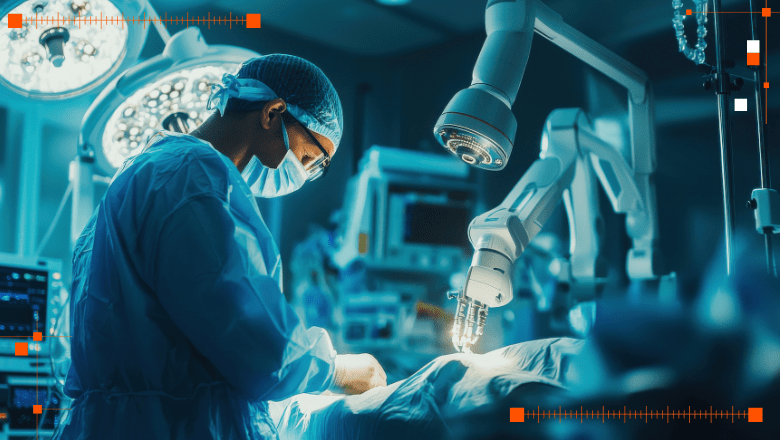
Join us for our upcoming forum featuring two exciting talks exploring Machine Learning to Improve Surgical Outcomes.
https://malmic.ca/wp-content/uploads/2025/11/Joey-Remote-Healthcare-copy.jpg1000630MaLMIC - Machine Learning in Medical Imaging ConsortiumMaLMIC - Machine Learning in Medical Imaging Consortiumhttps://malmic.ca/wp-content/uploads/2025/11/Joey-Remote-Healthcare-copy.jpg
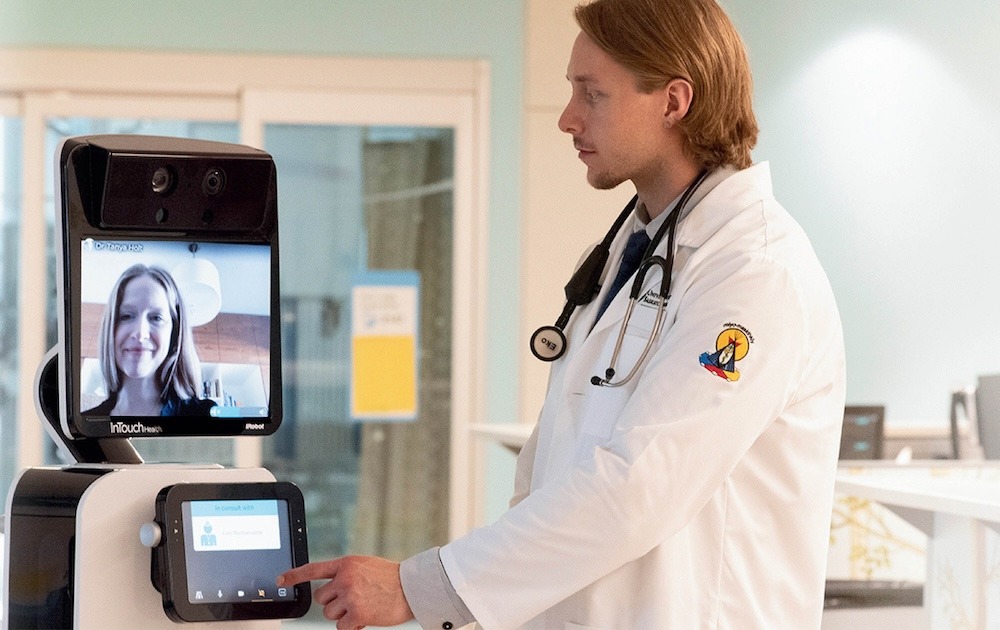
Listen in to two exciting talks from the Virtual Health Hub, which explored how artificial intelligence and virtual care are transforming access to healthcare.
Dr. Scott Adams examined how AI-assisted imaging is redefining medical imaging and expanding access to advanced diagnostics in underserved communities. He also showcased current projects demonstrating how AI can support a more connected, equitable, and sustainable health system.
Dr. Ivar Mendez focused on how virtual care, when grounded in local partnerships and cultural safety, can improve health outcomes in rural, remote, and Indigenous communities. He highlighted the AI tools developed to enable scalable virtual care solutions across Canada and beyond.
https://malmic.ca/wp-content/uploads/2025/10/MRI-for-Brain-Tumor-Detection-scaled-1-1024x485.jpg1024485MaLMIC - Machine Learning in Medical Imaging ConsortiumMaLMIC - Machine Learning in Medical Imaging Consortiumhttps://malmic.ca/wp-content/uploads/2025/10/MRI-for-Brain-Tumor-Detection-scaled-1-1024x485.jpg
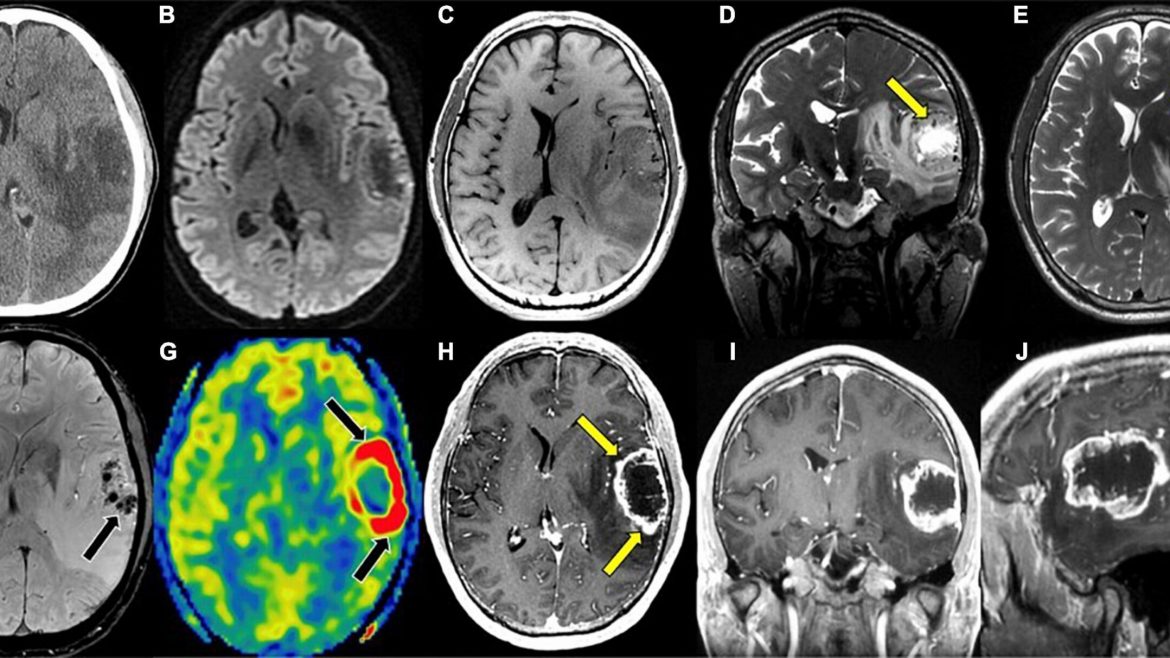
Listen to this high-impact session on AI for brain imaging that bridged cellular detail and clinical translation. Ahmadreza Attarpour’s talk showcased ACE (Artificial intelligence-based Cartography of Ensembles) and MAPL3 (Mapping Axonal Projections in Light-sheet fluorescence microscopy in 3D): end-to-end deep-learning pipelines that turn teravoxel, cellular-resolution light-sheet datasets from cleared rodent brains into unbiased, brain-wide maps of local neuronal activity and connectivity—at both cellular and laminar scales. The second talk by Mahmoud Salman shifted to the neonatal clinic, introducing a robust deep-learning framework that overcomes poor contrast, motion artifacts, and tiny target structures to precisely segment hippocampal subfields and amygdala sub-nuclei from routine MRI. Together, these talks demonstrated how scalable, generalizable methods are pushing neuroscience forward—from whole-brain mapping at unprecedented scale to reliable quantitative biomarkers of early brain maturation.
https://malmic.ca/wp-content/uploads/2025/08/1e37586c-521a-23c5-009b-5e5bf239046e-1024x682.jpg1024682MaLMIC - Machine Learning in Medical Imaging ConsortiumMaLMIC - Machine Learning in Medical Imaging Consortiumhttps://malmic.ca/wp-content/uploads/2025/08/1e37586c-521a-23c5-009b-5e5bf239046e-1024x682.jpg
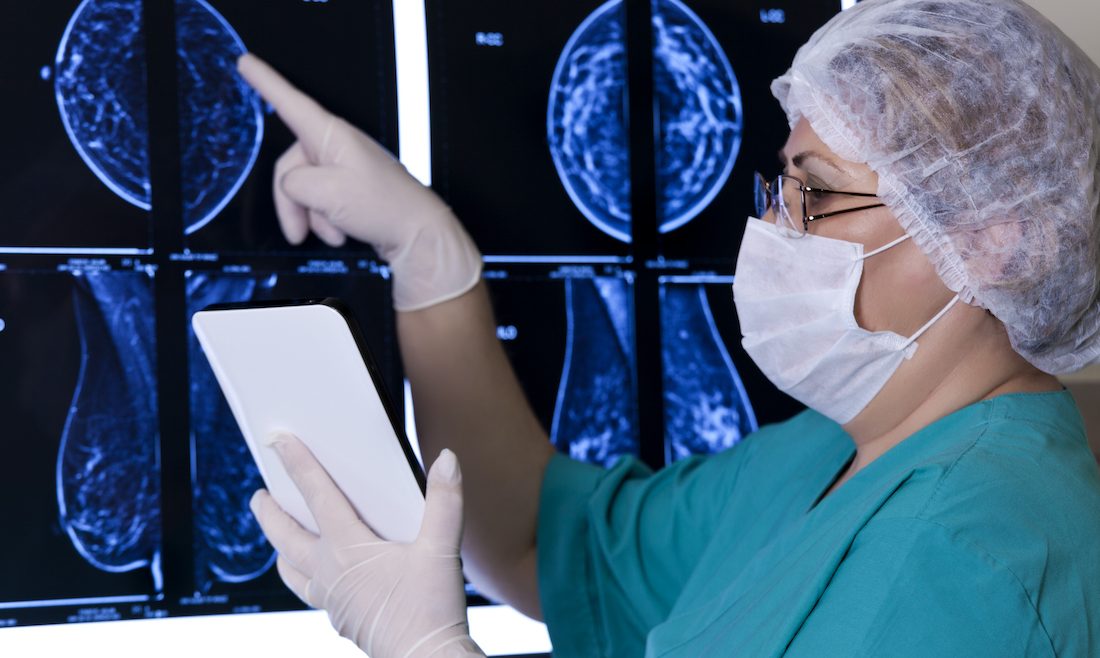
Drs. Amoon Jamzad and Laura Connolly shared two cutting-edge perspectives on advancing cancer surgery through robotics and intelligent tools. Laura spoke about her work on integrating AI-enabled robotics and haptic feedback into breast-conserving surgery to improve tumor removal in highly mobile, deformable tissue. She also shared how robotics combined with photoacoustic imaging can inspect resection cavities post-surgery, aiming for a future where no cancer is left behind. Amoon presented his research on applying deep learning to mass spectrometry data—capturing molecular tissue signatures in real time—to help surgeons accurately distinguish healthy from cancerous tissue. Amoon highlighted strategies for making these models trustworthy, explainable, and generalizable, and for translating mass spectrometry into intraoperative and post-resection workflows. Together, these innovations promise to enhance surgical precision, reduce positive margins, and improve patient outcomes.
https://malmic.ca/wp-content/uploads/2025/03/shutterstock_476546674-1024x683.jpg1024683MaLMIC - Machine Learning in Medical Imaging ConsortiumMaLMIC - Machine Learning in Medical Imaging Consortiumhttps://malmic.ca/wp-content/uploads/2025/03/shutterstock_476546674-1024x683.jpg
Glenn Bauman and Katherine Zukotynski spoke at the April MaLMIC forum about FULCRUM, a clinical imaging database they created. It is a database of PSMA PET/CT scans acquired as part of a province-wide prospective study. It is composed of approximately 1000 men with recurrent prostate cancer imaged with 18F-DCFPyL or 18F-PSMA 1007 with centralized expert review, annotation and segmentation of PET-detected recurrent prostate cancer foci. The database is being used to design educational tools and enable machine learning/deep learning tools for automated lesion detection.
https://malmic.ca/wp-content/uploads/2024/11/Screenshot-2024-11-18-at-12.24.13 PM-1024x480.png1024480MaLMIC - Machine Learning in Medical Imaging ConsortiumMaLMIC - Machine Learning in Medical Imaging Consortiumhttps://malmic.ca/wp-content/uploads/2024/11/Screenshot-2024-11-18-at-12.24.13 PM-1024x480.png
MaLMIC is pleased to support the 2025 IGT x ImNO Joint Symposium in Toronto ON on March 5 and 6, 2025. Throughout the symposium, there will be talks, pitches and posters on AI, deep learning and machine learning.
https://malmic.ca/wp-content/uploads/2025/01/The-Open-Health-Imaging-Foundation-1024x604.png1024604MaLMIC - Machine Learning in Medical Imaging ConsortiumMaLMIC - Machine Learning in Medical Imaging Consortiumhttps://malmic.ca/wp-content/uploads/2025/01/The-Open-Health-Imaging-Foundation-1024x604.png
January 31, 2025
3:00 to 4:30 p.m. Eastern
Gordon Harris and Alireza Sedghi presented information about the Open Health Imaging Foundation (https://ohif.org/), an open source web based medical imaging framework, at the January forum. The presentations were followed by questions and answers about the talks, and discussions focused on lessons learned, opportunities to collaborate, and sharing of data.
https://malmic.ca/wp-content/uploads/2024/09/shutterstock_2033472077-1024x683.jpg1024683MaLMIC - Machine Learning in Medical Imaging ConsortiumMaLMIC - Machine Learning in Medical Imaging Consortiumhttps://malmic.ca/wp-content/uploads/2024/09/shutterstock_2033472077-1024x683.jpg
October 25, 2024
3:00 to 4:30 p.m. Eastern
Aly Khalifa and Sanwook Kim presented at the MaLMIC fall forum, hosted by Julia Publicover. The presentations were followed by questions and answers about the talks, and discussion focused on lessons learned, opportunities to collaborate, and sharing of data.
https://malmic.ca/wp-content/uploads/2024/09/shutterstock_1089540233-1024x597.jpg1024597MaLMIC - Machine Learning in Medical Imaging ConsortiumMaLMIC - Machine Learning in Medical Imaging Consortiumhttps://malmic.ca/wp-content/uploads/2024/09/shutterstock_1089540233-1024x597.jpg
September 20, 2024
3:00 to 4:30 p.m. Eastern
Elham Dolatabadi and Catherine Stinson presented at the MaLMIC fall forum, hosted by Amber Simpson. The presentations were followed by questions and answers about the talks, and discussion focused on lessons learned, opportunities to collaborate, and sharing of data.
https://malmic.ca/wp-content/uploads/2024/06/Screenshot-2024-06-17-at-3.00.07 PM-1024x467.png1024467MaLMIC - Machine Learning in Medical Imaging ConsortiumMaLMIC - Machine Learning in Medical Imaging Consortiumhttps://malmic.ca/wp-content/uploads/2024/06/Screenshot-2024-06-17-at-3.00.07 PM-1024x467.png
Join us for an engaging webinar on June 27th at 11:30am that showcases the Quantitative Imaging for Personalized Cancer Medicine (QIPCM) program which provides end-to-end testing and analysis support for clinical trials to improve consistency and reliability in clinical trial imaging data.
When you visit our website, it may store information through your browser from specific services, usually in the form of cookies. Here you can change your Privacy preferences. It is worth noting that blocking some types of cookies may impact your experience on our website and the services we are able to offer.
Click to enable/disable Google Analytics tracking code.
Click to enable/disable Google Fonts.
Click to enable/disable Google Maps.
Click to enable/disable video embeds.
Our website uses cookies, mainly from 3rd party services. Define your Privacy Preferences and/or agree to our use of cookies.