

Join the Machine Learning in Medical Imaging Consortium (MaLMIC) for an opportunity to network on machine learning
MaLMIC Virtual Open Forum on Smarter Brachytherapy Planning: Deep Learning for Faster Cervical Cancer Contouring
This forum explores how deep learning can speed up MRI-guided HDR brachytherapy planning for locally advanced cervical cancer, where manual contouring is slow and long procedure times are linked to more acute side effects. The first talk presents multi-view and prompt-based foundation models for target delineation, evaluated on 164 patients. The second introduces fuzzy loss contrastive learning, a self-supervised pretraining method that improves contouring when labeled data is scarce. Attendees will learn where automated contouring stands and what steps remain before clinical use.
Friday, December 11, 2026
12:00 to 1:00 p.m. Eastern
Interested in joining? Please contact us.
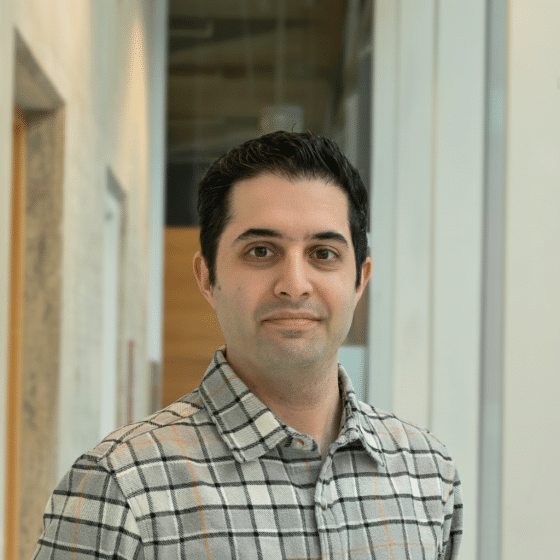
Soroush Ghomashchi,
PhD Candidate, Department of Medical Biophysics, University of Toronto
Soroush Ghomashchi is a Ph.D. candidate in the Department of Medical Biophysics at the University of Toronto. His research focuses on developing and validating deep learning frameworks for radiotherapy treatment planning, with an emphasis on automated target and organs-at-risk segmentation in MRI-guided high-dose-rate (HDR) cervical brachytherapy. His recent work benchmarks volumetric 3D multi-view fusion architectures, prompt-based foundation models (MedSAM2), and clinician-in-the-loop workflows to reduce contouring burden and improve treatment planning efficiency. Soroush also serves as a morning Linear Accelerator QA Technician at Princess Margaret Hospital and represents University of Toronto trainees as an institutional ambassador on the Canadian Organization of Medical Physicists (COMP) Student Council.
Talk Description:
In his talk, Soroush Ghomashchi will present new deep learning approaches to speed up MRI-guided HDR brachytherapy planning for locally advanced cervical cancer. Manually contouring target volumes is time-intensive, and existing models often leave clinicians with heavy corrections. Using T2-weighted MRI from 164 patients (369 fractions), the talk will compare two strategies: multi-view models that draw on axial, coronal and sagittal images together, and a prompt-based foundation model that lets clinicians guide segmentation with simple inputs such as bounding boxes. Soroush will share how performance was evaluated and how the approach aims to reduce bias and data leakage. He will also discuss plans for integration into treatment planning systems and for multi-center external validation, and he welcomes collaborators and open datasets.
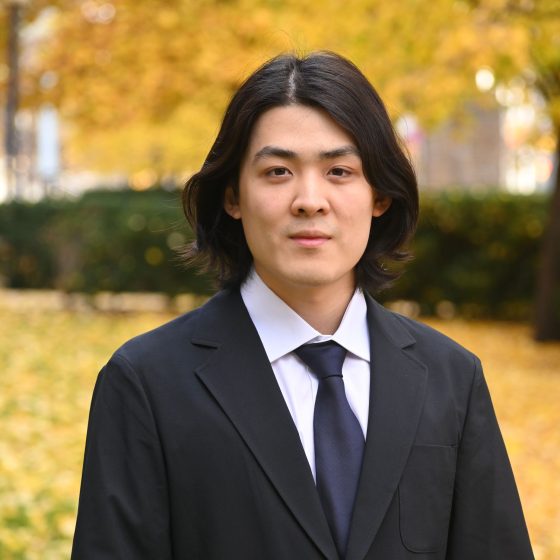
Ryan Yan,
PhD Candidate, Department of Medical Biophysics, University of Toronto
Ryan Yan is a second-year PhD student in Medical Biophysics at the University of Toronto, where his research focuses on deep learning for automated high dose-rate brachytherapy treatment planning. Ryan’s areas of interest are medical image analysis, self-supervised learning, and clinical implementation of automated models.
Talk Description: Ryan’s talk will introduce fuzzy loss contrastive learning (FLCL), a self-supervised pretraining method designed to improve automated contouring for HDR brachytherapy planning in locally advanced cervical cancer when labeled data is scarce. By using patient staging and an image similarity index, FLCL reduces the penalty for pairing highly similar patients during training. Pretrained on MRI and CT images from 172 patients, the model significantly improved contouring of the high-risk clinical target volume compared with training without pretraining, while results for organs at risk were less consistent. The talk will discuss these findings and what they mean for future work on brachytherapy treatment planning.