

Join the Machine Learning in Medical Imaging Consortium (MaLMIC) for an opportunity to network on machine learning
MaLMIC Virtual Open Forum on AI in Diagnostic Imaging: From Slides to Radiographs
Join us for our first forum as part of the MaLMIC Trainee Competition, where we will explore how AI can enhance medical imaging workflows, from prioritizing urgent chest radiographs to detecting small-volume prostate cancer metastases. Speakers will discuss advances in multimodal and pathology AI, model interpretability, performance across institutions, and the critical challenges of translating promising research into safe, reliable clinical practice.
September 11th, 2026
12:00 to 1:00 p.m. Eastern
Interested in joining? Please contact us.
MaLMIC Virtual Open Forum on AI in Diagnostic Imaging: From Slides to Radiographs
Join us for our first forum as part of the MaLMIC Trainee Competition, where we will explore how AI can enhance medical imaging workflows, from prioritizing urgent chest radiographs to detecting small-volume prostate cancer metastases. Speakers will discuss advances in multimodal and pathology AI, model interpretability, performance across institutions, and the critical challenges of translating promising research into safe, reliable clinical practice.
September 11th, 2026
12:00 to 1:00 p.m. Eastern
Interested in joining? Please contact us.
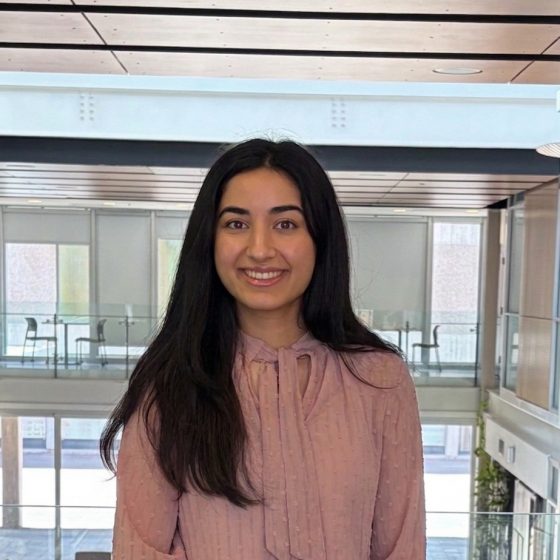
Zinah Ghulam,
MASc from the University of Guelph
Zinah Ghulam completed her MASc in Engineering at the University of Guelph, specializing in artificial intelligence, after earning her Bachelor’s degree in Biomedical Engineering from the same institution. Her work focuses on multimodal deep learning for medical imaging, with an emphasis on developing clinically meaningful AI systems for severity-based triage and visual explainability in chest radiographs. She is a Vector Institute affiliate and the winner of the SPIE Medical Imaging 3-Minute Thesis (3MT) competition. Zinah is also the Founder and Lead Organizer of the IEEE U of G AI Reading Group, where she brings together students and researchers to explore emerging developments in artificial intelligence.
Talk Description: Zinah’s talk will explore a multimodal AI framework designed to prioritize chest radiographs by clinical severity, combining imaging and clinical text to enable fast, interpretable triage. The presentation will highlight model performance, explainability, privacy-preserving deployment, and the critical gap between retrospective AI validation and real-world clinical performance.
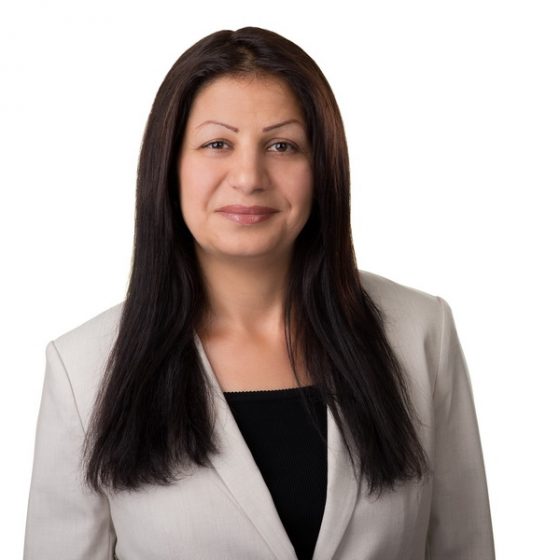
Dr. Fatemeh Zabihollahy is the Scientific Director of the AI Hub for Computational Pathology within the Laboratory Medicine Program at University Health Network (UHN), at University of Toronto. Her research focuses on developing and translating artificial intelligence methods for cancer diagnosis, prognostic assessment, and clinical decision support, with a particular emphasis on computational pathology and multimodal data integration. She leads multidisciplinary collaborations among AI scientists, engineers, pathologists, and clinical researchers to develop AI tools for real-world clinical applications. Dr. Zabihollahy holds a PhD in Electrical and Computer Engineering from Carleton University and is a licensed Professional Engineer in Ontario. She completed postdoctoral training at Johns Hopkins University, and University of California, Los Angeles.
Talk Description: Fatemeh’s talk will explore the development and validation of an AI-based approach for automated detection of prostate cancer metastases in lymph node specimens. The presentation will highlight how AI can learn from limited expert annotations, detect clinically important micrometastases, and support faster, more consistent pathology assessment across institutions.