

Join the Machine Learning in Medical Imaging Consortium (MaLMIC) for an opportunity to network on machine learning
MaLMIC Virtual Open Forum on Reliable AI for Clinical Data: From Brain Scans to Brain Signals
For machine learning to make a difference in healthcare, clinicians need to be able to count on it. This forum brings together two talks on building AI that holds up in real clinical settings. Aarat Satsangi will present an approach to detecting stroke on CT scans that combines multiple models into a team, shows which parts of the image drive each prediction, and measures how much the models agree, so that results are accurate and transparent. Daya Kumar will introduce NeurOCNN, a model that analyzes physiological signals such as EEG as continuous curves, allowing it to stay accurate when data comes from devices with different recording speeds, with no retraining needed. Together, the talks show how reliability, interpretability, and adaptability can move machine learning closer to clinical use, from medical imaging to wearable sensing.
Friday, November 13, 2026
12:00 to 1:00 p.m. Eastern
Interested in joining? Please contact us.
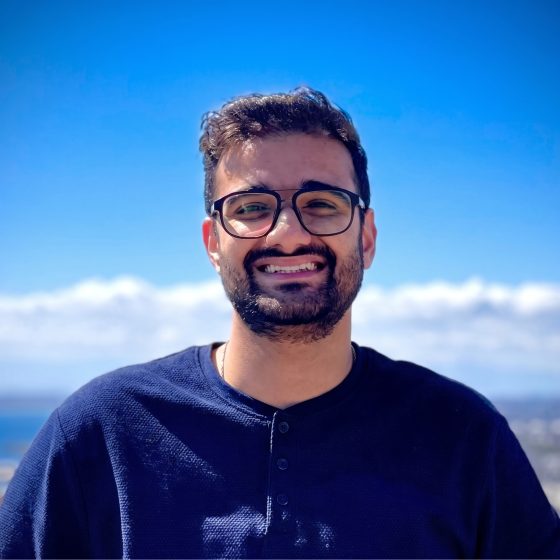
Aarat Satsangi,
PhD Candidate, Computer Science, Western University
Aarat Satsangi is a Computer Science Ph.D. student at University of Western Ontario, advised by Prof. Apurva Narayan, whose work begins with a fundamental question: how can models learn rich, reliable representations from raw visual and physiological signals without human labels? Focusing on self-supervised representation learning, Aarat is working towards developing foundational methods across computer vision and physiological time series and brings those advances into the medical domain. His goal is to bridge the gap between black-box deep learning and the clinic by engineering transparent, trustworthy Clinical Decision Support Systems.
Talk Description:
Aarat’s talk will explore how artificial intelligence can help doctors detect strokes faster and more reliably from brain CT scans. Treatments for stroke work best when given within about six hours of the first symptoms, but reading CT scans takes expertise, and even specialists can sometimes interpret the same scan differently. AI tools have shown promise, but hospitals have been slow to adopt them because of concerns about whether they can be trusted and whether anyone can understand how they reach their conclusions. To address this, Aarat and his team tested three AI models for consistency, then combined them into a “team” that is more accurate than any single model. The system also produces heat maps showing which parts of the scan drove its decision, along with a score showing how much the models agree, so doctors can see what the AI is looking at and how confident it is. The result is a tool that is faster, more accurate, and more transparent, designed to support doctors in their decisions rather than replace them. Explore the project at https://aaratsatsangi.in/projects/stroke-detector/index.php and view his broader work at https://aaratsatsangi.in/index.php
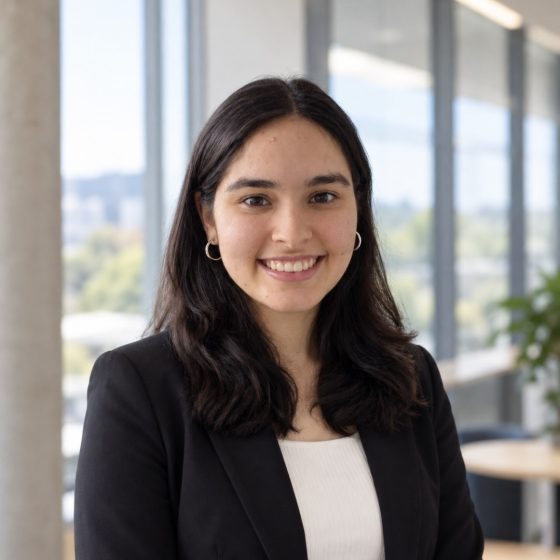
Daya Kumar,
PhD Candidate, Computer Science, Western University
Daya Kumar is a Ph.D. candidate in Computer Science at Western University, Canada. Her research focuses on developing robust and generalizable machine learning models for neurophysiological signals, with an emphasis on addressing variability across individuals, devices, and acquisition settings. She holds a B.Sc. (Honours) and an Integrated M.Sc. in Computer Science from Dayalbagh Educational Institute, India.
Talk Description: Daya’s talk will introduce a new AI approach for analyzing body signals such as brain waves (EEG), which can reveal a person’s physical and mental state. These signals are tricky for computers to learn from because they constantly change and vary depending on the device and conditions used to record them. In particular, devices capture data at different speeds (sampling rates), so a model trained on one device often struggles when given data from another. Daya’s solution, called NeurOCNN, treats each signal as a smooth, continuous curve rather than a series of separate snapshots, which lets the model handle recordings from devices it has never seen without being retrained. Tested on several datasets, it performed as well as today’s best methods while staying accurate when the recording speed changed. The work points toward more flexible and dependable AI for healthcare and wearable devices like fitness trackers and smartwatches.